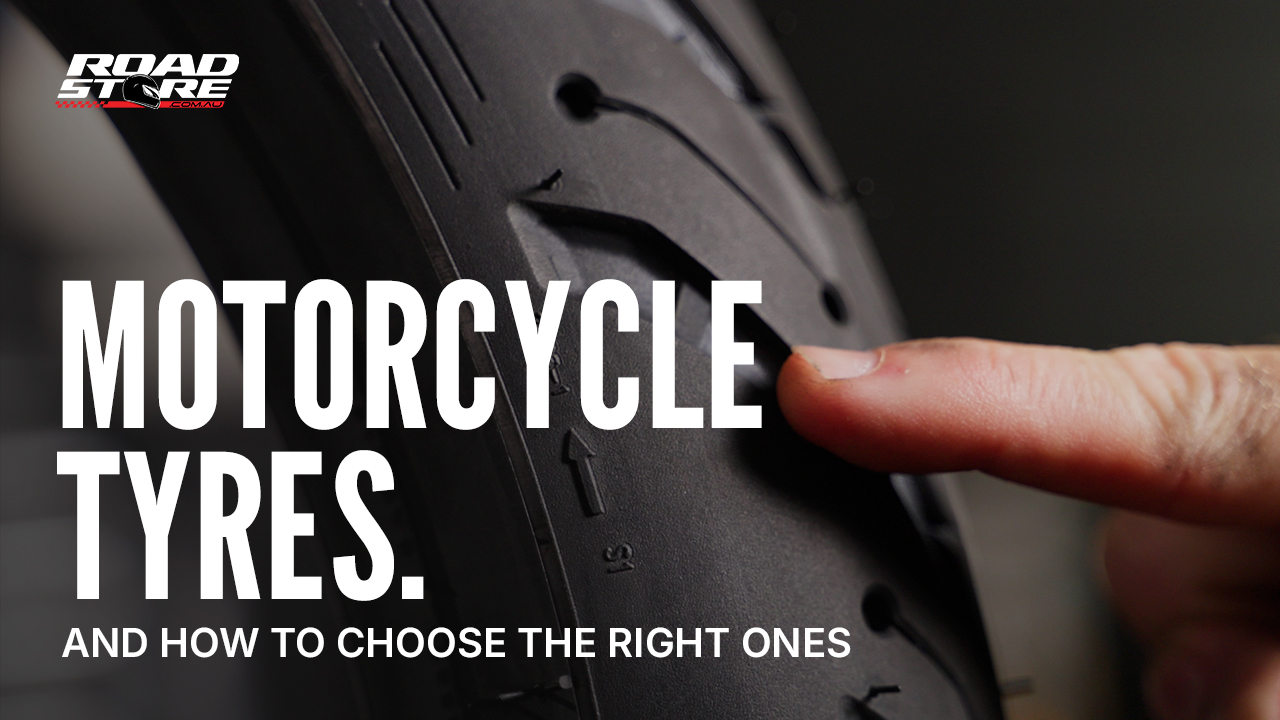
There are two patches of rubber keeping you connected to the road, and each one is about the size of a palm. Here is how to read them, how to know when they are finished, and how to pick the right ones for the riding you actually do.
Tyres are one of those things riders tend to ignore until they either look completely cooked, or the bike suddenly stops feeling right. The tricky part is that a tyre can need replacing well before the tread has disappeared.
Worth saying up front: most people do not choose a tyre the way tyre marketing assumes they do. Look at what actually sells and the top of the list is not a superbike tyre. It is a postie-bike Michelin, a scooter Maxxis and a classic Dunlop. Riders buy on fitment. They work out what physically fits the bike, then choose from what is left. So this guide is about how to find the right tyre, not which brand wins.
How to read a motorcycle tyre
If the numbers on a sidewall have ever looked like gibberish, they are actually pretty simple once broken down. Take something like 120/70-17.
| No. | What it is | What it means |
|---|---|---|
| 120 | Width | Section width in millimetres, measured across the tyre. |
| 70 | Profile | Sidewall height as a percentage of the width. 70% of 120mm in this case. |
| 17 | Rim | Wheel diameter in inches. This one is not negotiable. The rim has to match. |
After the size you will normally see a load index and a speed rating, and then the number almost nobody checks.
| Marking | What it means |
|---|---|
| 54W | Load index and speed rating. The number is the maximum load the tyre is rated to carry; the letter is its maximum rated speed. Match or exceed what the bike came with. Do not go down. |
| 2324 | DOT date code. Four digits: the first two are the week, the second two are the year. So 2324 is week 23 of 2024. This is the one that matters on an older bike, or a bike that does not get ridden much. |
| 3.50-19 | Imperial sizing. Older and classic fitments use inches instead, width then rim diameter. A Dunlop K70 Gold Seal is sized this way. Same idea, different units. |
Watch here for more
Five signs your tyres are done
Most people check one thing: tread. But tread depth is only part of it, and it is the one that catches people out least. Here is what is actually worth looking for.
- Wear indicators. Inside the grooves there are small raised bars. Once the tread wears down close to level with these, the tyre is done. They are the manufacturer telling you directly.
- Squaring off. Common on commuters and anything doing highway kilometres. The centre of the tyre goes flat instead of round. Even with tread left, the bike will feel reluctant tipping into corners.
- Cracking. Check around the sidewall and between the tread blocks. Rubber that is starting to crack or perish has aged, regardless of how much tread is sitting there.
- Age. Plenty of tread does not mean a tyre is still good. Rubber hardens as it ages and loses grip while still looking fine. Read the DOT code. Around five years is the point to start thinking seriously about replacement.
- Damage. Any major cut, exposed carcass, bulge or structural damage means replacement. Not repair, not monitoring. Replacement.
Sport, sport-touring, adventure or classic
Once you know what fits, the choice comes down to what the bike actually needs to do. For most road riders it simplifies to four broad categories.
SportExample: Michelin Power 6 Prioritises outright grip and turn-in. Softer compound, so the trade-off is tyre life. Genuinely worth it for hard riding or track days. Expensive if you do not. |
Sport-touringExample: Michelin Road 6 The default for most road bikes. Plenty of grip for spirited riding, noticeably better in the wet, and it will last far longer on a commute or a tour. If the category is unclear, this is probably the right one. |
AdventureExample: Michelin Anakee Adventure The more open block pattern works once you are onto gravel and dirt. On tarmac it is noisier and wears differently. Choose based on how much dirt you genuinely ride. |
Classic and commuterExample: Dunlop K70, Michelin City Extra Older and smaller fitments where the size decides the purchase, not the category. Postie bikes, scooters, vintage and retro machines. There is a right answer and a wrong answer, and not much in between. |
The main thing: buy a tyre for how the bike gets ridden most of the time. Not for the one imaginary track day or adventure trip that might happen once a year.
Tyre pressure: the free two-minute check
This is the easiest maintenance task on a motorcycle, it costs nothing, and almost nobody does it often enough.
The check
- Check cold. Ideally before the bike has been ridden. A warm tyre reads high and gives a false number.
- Use the bike's numbers, not the tyre's. The figure moulded into the sidewall is a maximum, not a recommendation. The correct figure is on the swingarm sticker or in the owner's manual.
- Set it, then re-check in a fortnight. Tyres lose pressure slowly and constantly. Every couple of weeks is a reasonable habit.
Too little pressure and the tyre flexes more, runs hotter, wears its edges and feels vague. Too much and the contact patch shrinks and grip is compromised. Both are free to fix.
Still not sure what size you need?
The easiest place to start is the tyre already fitted to the bike. Read the size off the sidewall, then match it up. If the size on there looks odd, or someone fitted something non-standard before you owned it, check against the manual rather than assuming what is on there is correct.
If you are still unsure what fits, get in touch. It is a faster conversation than a returned tyre.
Shop motorcycle tyres
Road, sport, adventure, classic and commuter fitments. If a size is not showing, get in touch and we will chase it.
Browse all tyres